The pigment signal
Melanotan II reaches beyond skin colour
The kidney case brings a hidden organ into a visible ambition. The pigment and receptor findings explain why the conversation has to widen.
Renal infarction
The kidney case and literature review published in 2020 describes renal infarction associated with Melanotan II use. The authors considered the peptide the most likely cause. They discussed a possible thrombotic influence, meaning an effect involving clotting, and possible direct toxicity to the kidney's working tissue. Earlier accounts of severe muscle breakdown and kidney failure also concerned them.
I take the suspected kidney injury seriously while its explanation remains unfinished. It supplies a documented association and possible mechanisms. This case gives me no denominator for calculating an injury rate and no controlled demonstration of causation. That uncertainty offers very little comfort when the ambition was a change in appearance.
A synthetic pigment signal
Melanotan II is a synthetic, ring-shaped seven-amino-acid analogue of alpha-MSH, a natural hormone. Its development history traces a melanocortin research programme that reached beyond pigmentation into sexual response. It activates several melanocortin receptors. MC1R on pigment cells starts a signalling sequence through cAMP, PKA, CREB and MITF, increasing tyrosinase and darker eumelanin pigment. Brain receptors, including MC3R and MC4R, are involved in appetite and sexual effects.
A broad receptor effect helps explain why a skin-focused description is incomplete. It does not establish the mechanism of the kidney injury; the case authors left that open.
Pigment in the mouth
A 2026 case report describes brown pigmentation of the gums and inner cheeks after Melanotan II use. Cheek pigmentation began fading within 28 days of stopping, while gum pigmentation was still visible at reduced intensity three months later. This was a single person's course, with different tissues recovering at different speeds.
Pigmentation in the mouth has a reach that unsettles me. The visible change had spread beyond the skin that a person might have intended to darken. It also outlasted the decision to stop.
Erectile response and appetite
In a double-blind crossover trial involving 10 men with psychogenic erectile dysfunction, Melanotan II produced clinically apparent erections in 8 of 10 men. Mean duration of substantial rigidity was 38 minutes, compared with 3 minutes for placebo (p=0.0045). Transient nausea, stretching and yawning were reported and resolved without treatment.
A separate experiment in male mice put the agonist directly into the nucleus accumbens, a brain region involved in motivated behaviour. Food intake and willingness to work for food fell, without the taste-aversion or metabolic-rate change that would suggest simple sickness in that model. The setting and route were highly specific to the animal experiment.
These findings demonstrate biological activity. They leave the long-term human safety question wide open. Melanotan II has no regulatory approval for any use; its development did not complete the later-phase trials needed to establish that record.
Other serious safety concerns
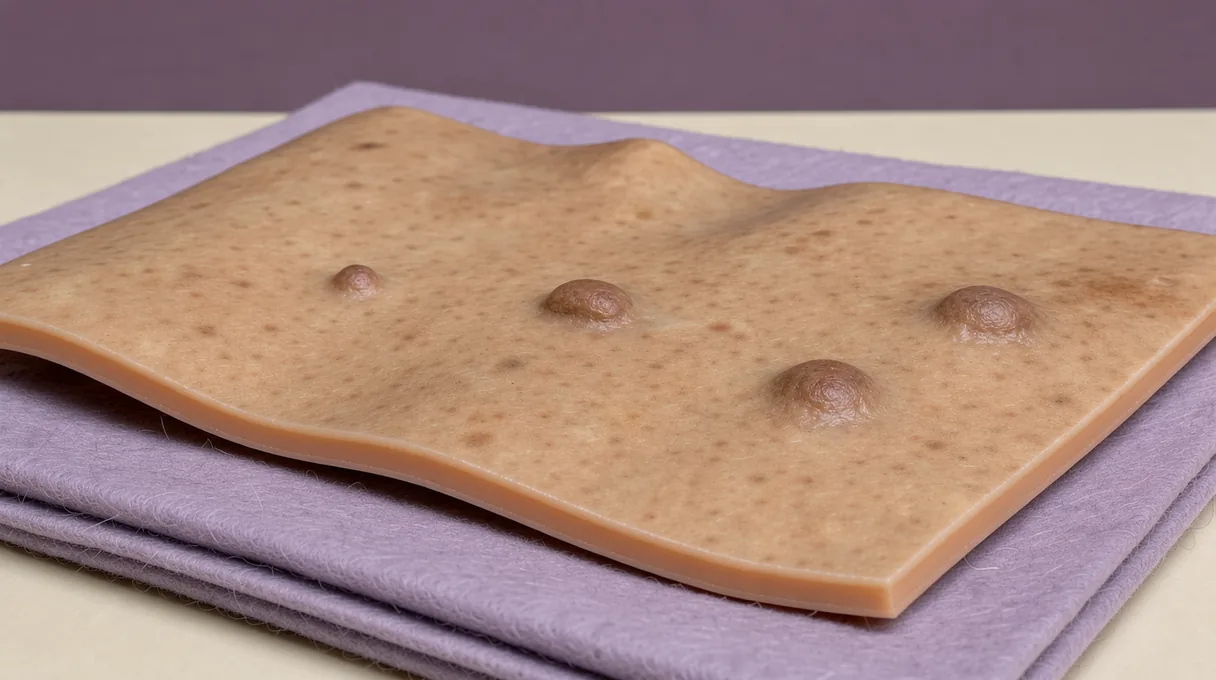
The published safety record also includes reports of new or changing moles, melanoma, priapism and posterior reversible encephalopathy syndrome, a brain-swelling condition. Melanoma reports establish an association in people using melanotan products; the long-term causal risk remains unsettled, especially alongside sun or sunbed exposure. Priapism is a prolonged, painful erection and a medical emergency. New or changing moles warrant prompt dermatological assessment.
The renal-infarction review documents the kidney concern and discusses earlier muscle breakdown and renal failure. Nausea appears in the controlled human trial. Blood-pressure effects have also been observed in preclinical work, with poor characterisation in people using unregulated material. Inaccurate labelling, impurities and uncertain contents add product-quality risks to the pharmacology.
Taken together, the reported harms leave me wary, even though many of the most alarming observations come from case reports. The evidence cannot supply a reassuring frequency estimate. Approval and trial findings for separately developed related drugs do not extend to Melanotan II.
Why people describe continuing
Community accounts describe satisfaction with a deeper tan, more confidence, reduced appetite and sometimes heightened sexual response. They also describe nausea, flushing, fatigue, yawning, uneven colour, darker moles, new spots and colour fading patchily after stopping. These are anecdotal reports, not clinical evidence. A personal impression that darker skin offers protection from burning also appears in those accounts; that belief establishes no protection.
I sympathise with wanting a deeper colour. Satisfaction still answers a different question from a safety measurement. The comparison of outcomes puts that distinction beside the very different topical GHK-Cu record and the unanswered questions around GLOW.